I knew the movie was going to be infuriating. I made a prophecy to that effect. “The Odyssey is going to make me really mad,” I said to my wife, in the car on the way to the local cinema.
Not because of what’s in it. The film turned out to be a relatively faithful, very well-realized retelling of Homer’s 2500-year-old original, though I found the contemporary American accents weirdly unsettling.
No, I was furious because of what — or rather, who — is not in “The Odyssey.”
Cassandra is missing. Cassandra, the princess and prophetess of Troy, who foretold the city’s fall but was ignored. Cassandra, whose name later became synonymous with doomsayers. Cassandra, the insult applied to the first researchers who tried to warn the world about pollution, resource limits, climate change, and the eventual risk of civilizational collapse.
Cassandra, who was always right.
In Christopher Nolan’s “The Odyssey,” Cassandra was nowhere to be seen. It was as though the curse of Apollo, which caused her prophesies (all of them true) not to be believed, had followed Cassandra all the way into the 21st century’s boldest experiment with old-fashioned, 70mm IMAX film.
For me, the central fact about the Trojan War is that the fall of Troy could have been avoided, if only someone in authority had listened to Cassandra, believed her, and convinced the King to follow her advice — and not take the great wooden horse (spoiler: it is full of invading soldiers) inside the otherwise impregnable city walls. By metaphorical extension, if humanity’s political and business leaders had only listened to the conclusions of science a few decades earlier, and more quickly made a transition to renewable energy, we would not be facing record heat waves, fires and droughts in Europe this summer.
But in “The Odyssey”, the central fact about the Trojan War is Odysseus’s trick with the horse. Somehow, that trick offends the gods. This sets an inevitable series of magical events in motion. The final result, many centuries later, is a beautifully crafted 3-hour movie.
To be fair, my fury is not with the director, Christopher Nolan. For the record, I am a Christopher Nolan fan. Not only is he a consummate filmmaker, he also manages to make films that actually get people talking, even thinking, almost as if they had all read a good book together in a book club, and needed to discuss it.
As it turns out, my fury, which has begun fading to mere disappointment, is with Homer. Homer never mentions Cassandra’s prophesies either. Though Cassandra was a well-known figure in Greek religion (which we call a “mythology” now), we mostly know about her through the ancient Greek equivalent of Hollywood: the plays of Aeschylus.
Imagine attending one of Aeschylus’s plays in ancient Greece! Torches line the front of the stage, creating an eerie atmosphere. Robed figures step out of the shadows and speak loudly to the air, the audience, the gods. “What if no one believes me?” Cassandra wonders aloud, and very dramatically, when trying to warn of Agamemnon’s coming murder. “It’s all the same. Whatever must happen, will happen. Soon you will all be in mourning, and admit that I am all too accurate a seer.” (Note that this is not an accurate translation from the text of Aeschylus’s play Agamemnon. I took Gilbert Murray’s 1920 forced-rhyme English translation and rewrote it in modern prose. Call it “taking prosaic license.”)
Without Cassandra, Nolan’s version of the Trojan War story, like Homer’s, is less compelling to me. Public comments seeking to link “The Odyssey” to contemporary events and personalities all feel quite far-fetched, and it is telling — and a tribute to both Homer’s and Nolan’s storytelling skill — that almost anyone can find the message they are looking for in the trials suffered by Odysseus and his men after his sneaky, stubborn break with “Zeus’s Law.” The capacity of “The Odyssey” to absorb different types of projection (pardon the pun) is what makes the movie, like its source material, timeless.
But here is my big complaint. Without Cassandra in “The Odyssey”, I am unable to write a pithy article linking the year’s biggest movie to the book I wrote in 1999, Believing Cassandra, or to crow about how right I was back then, when I pointed out how right my mentors and friends had been, decades before that. If Homer’s (and then Nolan’s) version had included Cassandra, they could have focused on the theme of believing the truth when it is presented to you, otherwise you will paying a very high price. And then I, and hundreds of other pundits, could have made the obvious link to climate science and books like The Limits to Growth, using every available variety of the phrase “I told you so.”
With “The Odyssey” in my headline and Cassandra all over the Internet ” (I imagine her being played by Anja Taylor-Joy or Michelle Yeoh), I could have ridden those cinematic and book references into the statistical heights of blog visitors and Substack views.
But, just as I prophesied to my wife, I can’t do that.
And that’s infuriating.
*
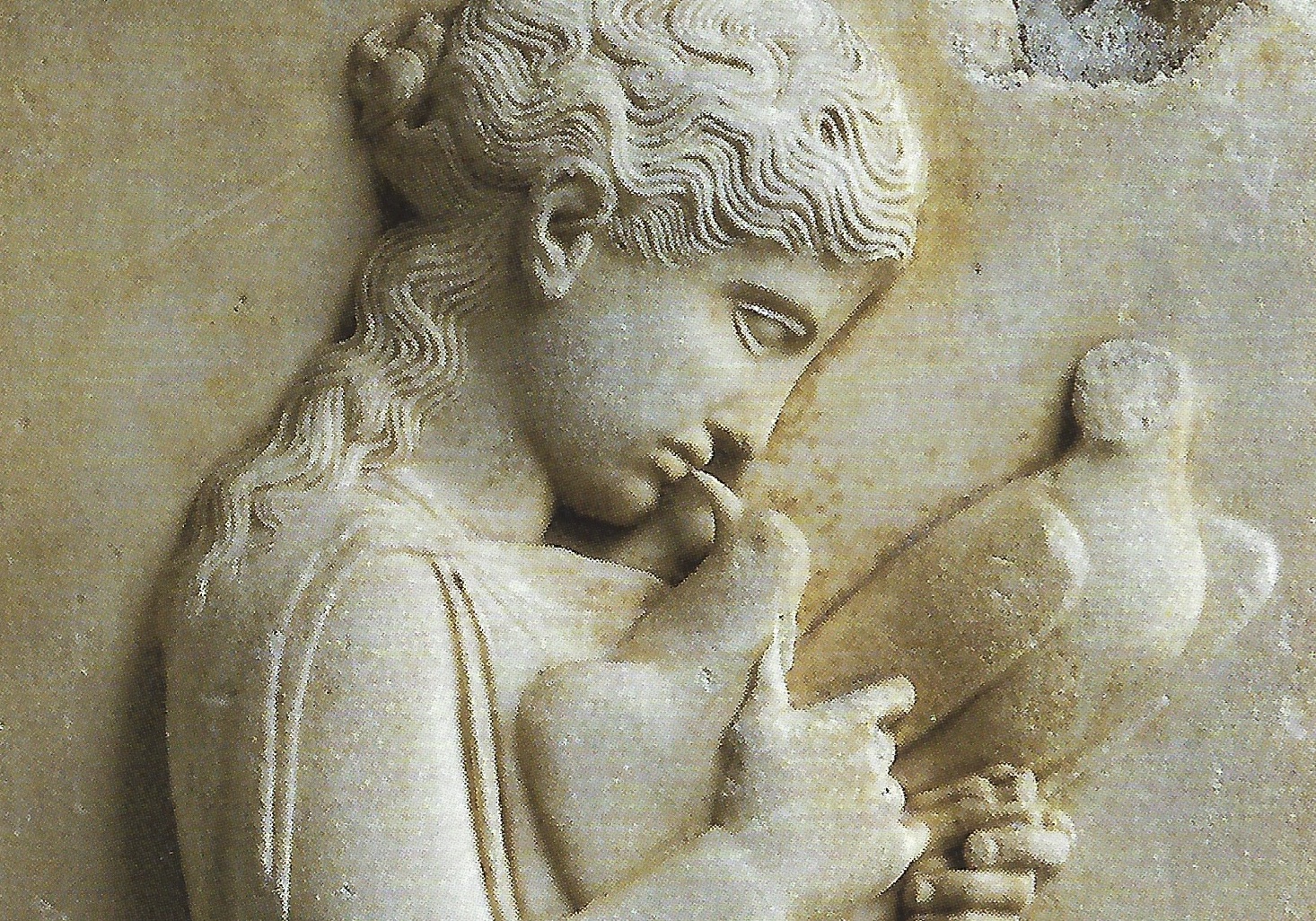
The image above was used on the cover of the first edition of my book Believing Cassandra. The image is not, however, a depiction of Cassandra.