Addendum 19 July 2026: Apparently I have already been proven wrong about this piece, as the match between France and England — which many writers noted ”nobody wanted to play” — is already being called a ”classic”. Ah well. I won’t retract it. My main point about nostalgia still stands. /Alan
One of the key ingredients making the FIFA World Cup so compulsively watchable is nostalgia. I am already nostalgic about 2026, even before the final match is played to decide which team will be written into football history. The drama of this tournament has been spectacular. Thrilling last-minute victories and losses. Dastardly back-room conniving. Small nations outperforming giants. And to my great relief, very few matches have been decided on penalties, a process so random one might just as well play a few rounds of pachinko to decide who wins.
The emotions on offer at the World Cup are always colored by the memories of World Cups past, making the current tournament, in terms of the collective mental space that it occupies, cumulatively larger than any tournament before, regardless of outcome. This steady growth in “Gross International Nostalgia” is inevitable, and it is independent of how many teams compete, how much money is set in motion, how many extra minutes of TV are created by “hydration breaks” or a gaudy American-style halftime show for the grand finale.
Nostalgia contributes to the joy of watching the joyful: Messi’s non-stop double fist-pumping after Argentina’s semifinal comeback victory over England was as real, and as contagious, as such gestures get. It made one feel a look-back-in-time longing to re-witness that moment of joy — even while it was still happening. Unless one was rooting for England, of course. For those fans, the sadness was crushing, accentuated by the wistfulness of “so close and yet so far.”
Nostalgia was an emotional amplifier in both cases: Argentina thinking of a past filled with huge wins and equally huge losses (especially the loss in the relatively recent, historically speaking, war with England over neighboring islands). England, meanwhile, was feeling the weight of a thousand years of history. It will be hard to forget the perfectly motionless, deeply forlorn expressions on the faces of the England fans who were dressed up as Knights of the Round Table, their foam-rubber swords hanging limply from their extra-wide fake-leather belts. The reality of this sudden, surprising loss on the football pitch seemed to recall, for them, the disappointment of losing an entire empire.
But it could get worse for England. Much worse. Despite successfully battling their way to the semifinal through a field that included adrenalin-crazed Viking warriors (I participated in the “Row” in the main street of Bergen, Norway, after Norway defeated Brazil, and it felt like being a Viking), England could soon taste the bitterness of losing again, this time to an even more nostalgia-infused rival: France.
France’s loss to Spain carried its own historical baggage, of course. But in France’s case, the nostalgia gathered like a fog over the field from opening kickoff. This was nostalgia for a greatness that had long been foretold, but ultimately failed to materialise. The stately beauty of the French team’s passing fell far short of countering the rough-and-tumble hunger evidenced by Spain’s bullish fighters, who clearly wanted the victory more intensely. You could almost see the French squad starting to reminisce about “what might have been,” long before the final whistle had blown.
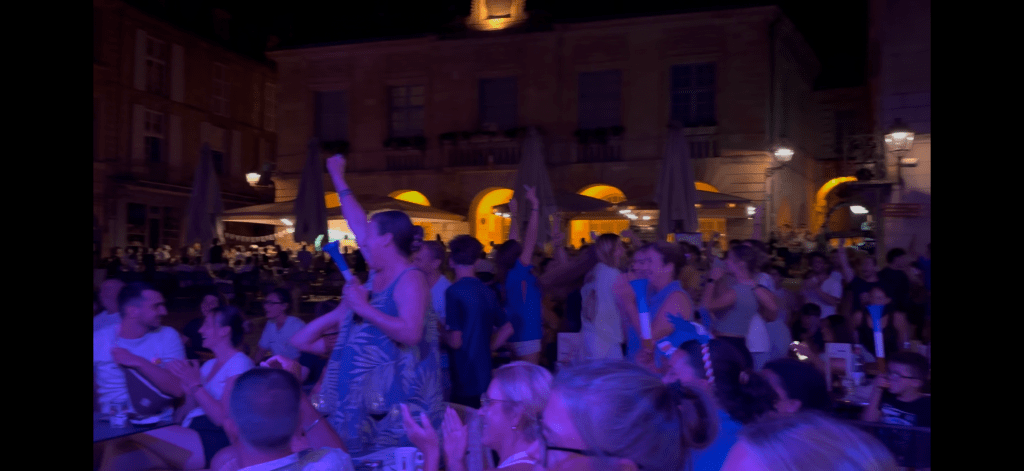
Losing to England in the consolation bronze match would be the final humiliation for these French dreamers, but the same is true for England’s battle-worn football soldiers. Even that word “consolation” is dripping with nostalgia, referring as it does to the offer of some comfort for a recent disappointment. But winning the bronze medal brings no actual solace. It is a reminder that one made it to the semifinal, and lost. It is a continuous invitation to feel an ache for the missed opportunity.
And losing in that match? Suddenly, the pride that should accompany a brilliant campaign to the near-summit of global football is transformed to something approaching shame.
Whoever comes out on top in the scoring of the bronze match, both the winner and the loser will have been forced to play against their will. Both would rather be heading home to study what went wrong in the semifinal, and to begin the four-year process of trying again to reach the peak. Instead, they will have been stuck in the back lot, required to slug it out with a traditional cross-channel rival, in a match without real meaning.
It is my view that no team should be subjected to the risk, indeed the tragedy, of losing twice in a row in the closing matches of the World Cup. Once you are beaten in the semifinal, you should be released from duty. It would be much better — for the players, for the fans, though perhaps not for FIFA’s revenues — to give both France and England the bronze. To clap both captains, Kane and Mbappe, on the back and say, “Well done. Go home and rest. And better luck next time.”

Please like and subscribe
Also published on Substack

