Yesterday, April 22, was Earth Day. I forgot about it completely, until I was reminded of it by doing a word puzzle in my New York Times app, late in the evening. Of course the puzzle had some classic, now almost ancient environmental words in it, like reduce, reuse, and recycle. The whole experience was initially a bit deflating, and it sent me down a rabbit hole of reflection. (Don’t worry, I ended up in a hopeful place.)
Thirty years ago, on Earth Day, I would have been giving a keynote speech somewhere — Earth Day was always a very big day for us early movers in the sustainability movement, at least in the United States, where I was living at the time.
Earth Day was already decades old by then. Founded in 1970, at the initiative of US Senator Gaylord Nelson, it was organized by a young Denis Hayes, who twenty years later developed the observance into an international event. By coincidence, the traditional Earth Day date is also the birthday of Vladimir Lenin, which led some to claim that the whole idea was a communist plot. But the idea survived and grew, and perhaps the culmination of this movement can be seen in the signing of the Paris Agreement on climate change, which happened to occur on April 22, 2016. I had forgotten that fact, too, until reading up on Earth Day at Wikipedia.org. (Please donate something to them. I did.)
My forgetfulness aside, it is equally telling that I spent Earth Day 2026 negotiating the final details on the purchase of a new electric car — new to us, that is. We have driven an electric car since they first hit the mainstream market about 15 years ago. We used to lease our electric cars, because the technology kept evolving so fast and we did not want to get locked in. Now things have stabilized enough that we feel comfortable buying one. The transformation from fossil-fuel to electric-powered transport is far from complete, but the process is so mature that it feels unstoppable. The current oil crisis, caused by yet another surge of impulsive belligerence in our increasingly chaotic-feeling world, will no doubt speed that process up.
Indeed, the world’s recent progress on energy transformation is promising overall. But in the 1990s, I was still hoping that we would be going much farther, much faster. In the 1990s, on Earth Day, you would find me standing on a stage somewhere, doing my best to give a motivational speech. One of these speeches is preserved in my 2012 collection of essays (Because We Believe in the Future), sporting a headline that was typical of my efforts then to be both preachy and witty: “Who on Earth (Day) Do We Think We Are?”
That speech was the cerebral sustainability wonk’s version of fire and brimstone. I decried humanity’s — or at least, America’s — complacency and hypocrisy. I quoted George Bernard Shaw (“The sign of a truly educated [person] is to be deeply moved by statistics”) and Vandana Shiva (“The real limiting factor that threatens biodiversity is the absence of an ethic of compassion which makes protection of other species a moral imperative”). I called for replacing the three R’s of environmentalism — reduce, reuse, recyle — with “redesign, rebuild, and rededicate.” It was a theme I would return to many times in my career.
And it was heady stuff, but my intention here is not to romanticize that earlier time, far from it. Back then, my ideas of what transformation looked like, and how best to make it happen, were pretty naïve, even though I was already teaching workshops on the topic. Here is how I introduced my 1994 speech in that 2012 essay book:
“I remember delivering it into a cheap microphone on a windy day, outdoors, no stage, rain threatening, to a crowd of fewer than seventy-five people gathered at Western Washington University in Bellingham. The weather reflected my mood at the time, which was more angry iconoclast than optimistic change agent. This text is possibly best categorized as a rant.”
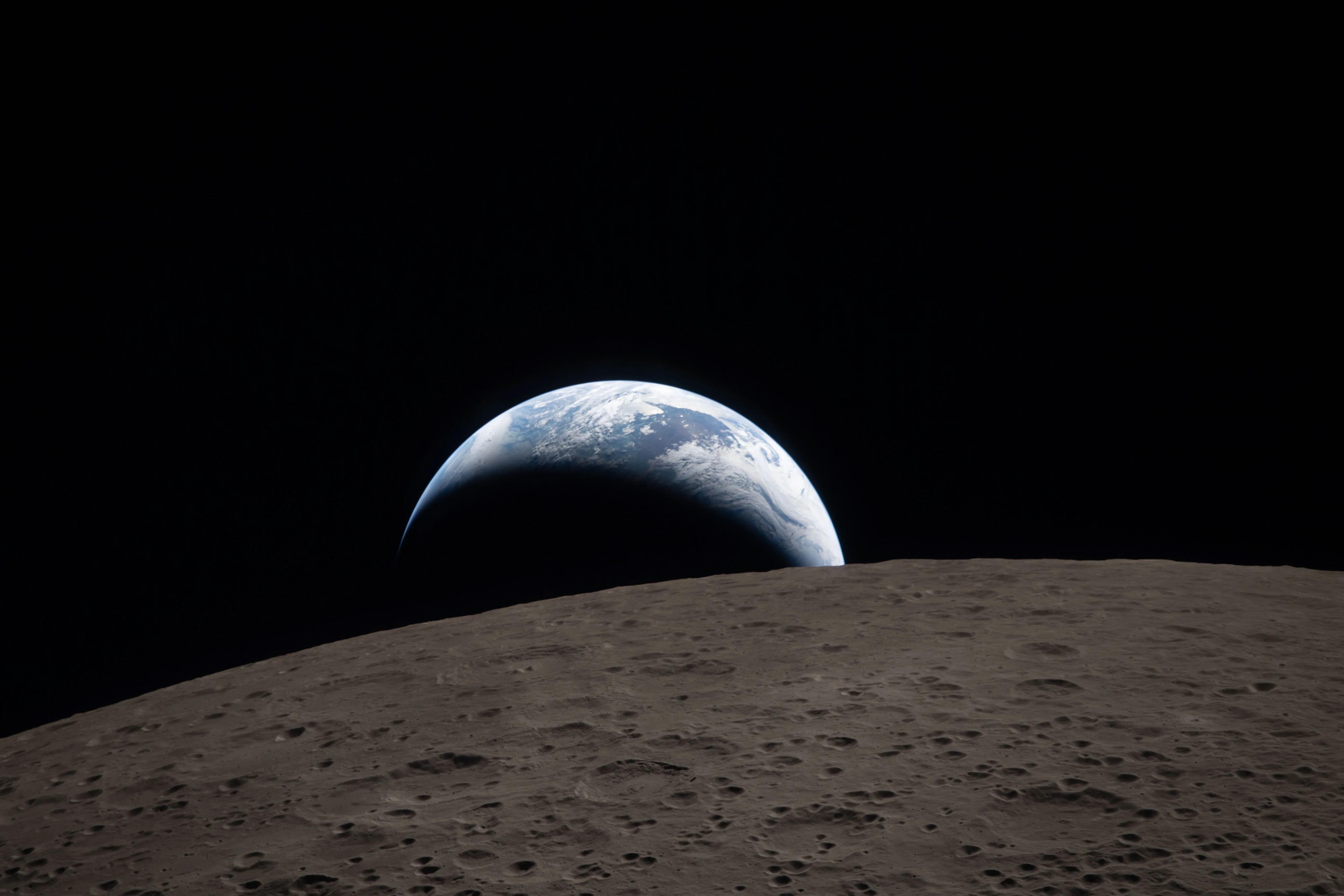
Fortunately, the whole world got better at promoting sustainability. We learned how to stop ranting and to effectively use policies, economic subsidies, social marketing, and even geopolitics to get sustainability issues more prominently onto the world’s agenda. Earth Day remained in the picture, it is still celebrated today (or rather, yesterday). But I still think I was right, in my cranky way, when I complained about the very existence of Earth Day in my 1994 speech. Dedicating just one day a year to something so central as caring for the planet on which we live seemed less like a solution to me, and more like a symptom of the problem. The recent pictures of the Earth taken by the Artemis II astronauts (one of which is the illustration for this article) are a much more powerful reminder of where we live, what all life depends on, what is actually at stake.
Frankly, the fact that I spent Earth Day oblivious to the fact that it was Earth Day, and reviewing the terms of a purchase contract for an electric car, seems like a good indicator. Transformation, of the real and practical kind, systemically, at scale, is finally happening — still way too slowly, and it’s still way too easy to derail and delay it by the various powers that be who profit on ecosystem destruction. But it’s happening. It’s even embedded into the mundane world of car loans, credit checks, and used car guarantees.
But it is still very much the case that we need to go much farther, much faster, in our efforts to transform human civilization into something that integrates harmoniously with Earth’s ecosystems. Earth Day may have been yesterday, but it is definitely not “so yesterday.”
Ranty as it sounds, and despite my misgivings, I believe this old marketing slogan still holds a very deep truth:
“Every day is Earth Day.”

