If you want to listen first and then read the article, go to Spotify, YouTube, or Apple Music (and other services). Or listen free at this website: AmericanTroubadour.com.
Every time I tried to tell you
the words just came out wrong,
so I’ll have to say “I love you”
in a song.
— Jim Croce, American Songwriter, 1974
When my American-Swedish family celebrates Thanksgiving, we usually do it early. The last Thursday in November is not a holiday in Sweden, though “Black Week” is now an overwhelming presence in Swedish shopping malls. For my family, Thanksgiving often falls on a Friday or Saturday evening.
Being the only one in the group with personal experience of a real American Thanksgiving dinner, I usually do most of the food, which is a great pleasure. I love preparing mashed sweet potatoes, roast turkey, stuffing (one should say “dressing”, I am told, when it is not actually stuffed into a turkey), and this year I even made an apple pie from scratch. In honor of my late godfather Bob Meadows, I carved a Greek “π” symbol in the middle of the crust. That was Bob’s signature pun: “Apple pi”.
At dinner, I made a little toast, reminding my family that the whole point of this holiday was not just to feel thankful, but to come together in peace. This was Abraham Lincoln’s primary intention in declaring the national holiday in 1863, in the middle of the brutal American Civil War. Lincoln believed that the nation needed a way to heal. (For a lovely short review of the history of Thanksgiving, see historian Heather Cox Richardson’s newsletter on Substack.)
I believe “Honest Abe” knew what he was doing, and celebrating Thanksgiving is probably the most American thing that my family does here in Sweden. We also eat American pancakes once in a while, and we have always kept peanut butter in the house. Otherwise, by any other way you care to measure it, we are a very Swedish family in most respects.
That includes me. After 25 years in this Scandinavian country, my perspective on the US has become that of an American-Swede, a naturalized immigrant and dual citizen, looking back over the ocean. Once I became committed to living here, I made it a goal to become fully integrated into Swedish life — and I succeeded, to the point where I ended up working in a Swedish government agency, in a position that involved representing Sweden in our dialogues with counterparts in other countries, including in the US government (among many other duties). “Why is your English so good?” was a frequently asked question.
My acquired Swedish identity does not mean that I love the US — the land of my birth and heritage, my home for 38 of my first 40 years of life — any less, however. In fact, after I started living in Sweden, I discovered that I loved the US more than I did before. Of course, I also love Sweden, and I am proud of my service to this country. But one of the things I am also proud of, from my years as a consultant, is the work I did to advise and support US military installations in becoming more sustainable. (I was already living in Sweden by then.) An award given to me by the US Army for that work is one my most prized possessions.
But talking about love of country these days is hard, isn’t it? Even the simple phrase “I love my country” seems loaded with ideological baggage, requiring several more sentences to explain what the speaker means by “love” and “country”, together with disclaimers about (and sometimes advertisements for) party affiliation, certain kinds of nationalism, or other nuanced varieties of political identity. This is true in both the US and Sweden, by the way, and probably in many other democratic countries where the social fabric is becoming frayed by polarization and distrust.
I count myself lucky that I continue to have friends in the US on both sides of the gaping party-political divide. Especially when talking with my Republican friends, we usually avoid direct references to politics. (I myself am an ex-Republican. I even interned in Washington DC for my Republican congressman when I was a high school student.) To be fair, I don’t talk much with any of my friends in the US, regardless of their political leanings, about the growing heartache I have felt in watching the country grow tenser, meaner, and angrier over the past 15 years.
I confess to missing the existence of a genuine political center in the US, which is usually where I end up in Swedish politics. Perhaps I am more of a salad than a centrist here in my adopted country. I see things I can agree with in every Swedish party that is not sitting at the extreme ends of our political spectrum, either left or right. I identify not with any one party, but with a broad, fuzzy zone hovering somewhere over the middle, which makes voting a real puzzle sometimes. But there is no such vague, middle-of-the-road positioning possible in the US context anymore, and therefore nothing to buffer the tension between increasingly hard positions. Balanced, moderate, and indeed courteous centrism is an odd thing to mourn, but I mourn it.
And I worry — a lot — about where the US is heading. I remember the exact moment when I started worrying for real. My family and I were traveling in the US to visit relatives, maybe 15 years ago. We had stopped in a small city on the Eastern seaboard, south of Washington DC, a place with a lovely town center and a waterfront park. While strolling through, we happened on a political event — a small stage, lots of red, white and blue ribbons, and someone handing out buttons featuring a snake that said “Don’t Tread On Me”, which our young children thought was pretty cool. They were happy to wear those buttons. I liked the historical reference to the Revolutionary War. Great, I thought, my kids are getting an introduction to American democracy in action.
We were just in time for the speeches, and as the speakers warmed up, I increasingly became concerned by their tone and content. I heard lots of things being said that were patently untrue, or just very hateful, being yelled ever louder, by people who were clearly very angry, and who were keen on generating an angry response from the crowd. The atmosphere felt increasingly uncomfortable. This was not the democratic exercise in promoting different policy options, including ideas I probably didn’t agree with, that I had been naively hoping for. This was pure populism. I eased my family away from the stage and down a few blocks; I seem to recall that we told the kids we were off to get ice cream.
When we got back to Sweden, I kept thinking about that incident, as well as many other things I had seen and heard in the US, all of which pointed to pockets of deep and festering discontent with the process of democratic government itself — a discontent that seemed quite out of proportion to what the current government was actually doing. I saw signs of political fear, rage and even hate that I had never seen before in my life.
The whole experience moved me
to want to do something.
I started writing a song.
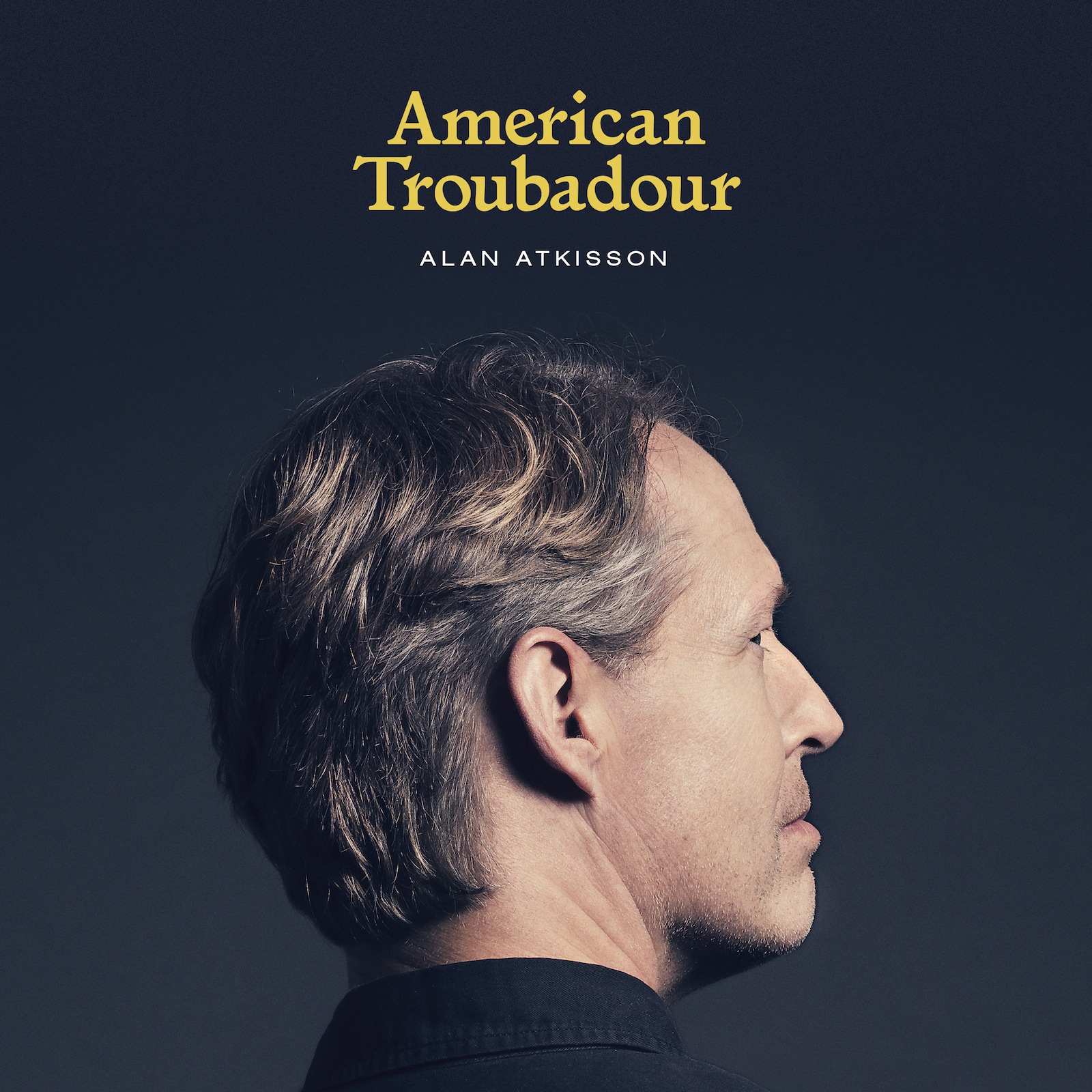
The whole experience moved me to want to do something. I felt a longing to make some kind of gesture that might help repair a social fabric that seemed increasingly torn. Not knowing what else I could possibly do, especially given my expatriate status, I started writing a song. That song became American Troubadour — the title song for my most recent album, which was first released back in 2014.
As far as I can see, the trends that I observed on that family trip to the US 15 years ago have only worsened and deepened over time. “Polarization” does not begin to describe the current mood in the country. Around 40% of Americans polled in 2025 said that a civil war was either “somewhat” or “very” likely within a decade. I do not personally agree with that assessment, and I think polls like that are alarmist. The Center for Strategic and International Studies (CSIS), a highly regarded think-tank, dismisses the risk of civil war as “negligible”, pointing instead to the very real risk of sporadic violence by lone gunmen. Since publishing that analysis in September 2025, CSIS has proven terribly prescient.
News regarding incidents that can further polarize the United States make their way instantly over the Atlantic to Stockholm and into our newspapers and nightly news. They feed that genuine ache in my heart, and I have increasingly struggled with the question of what, if anything, to say about it all.
During my years of Swedish government service, I could not say a thing, at least not as an individual. I spoke for Sweden and for our government’s policies regarding cooperation with the US on international development issues. (Note: I worked for Sida, an independent Swedish government agency, roughly equivalent to the now-defunct USAID. I was a senior civil servant, and therefore not a member of government per se; but as a deputy to the agency’s Director-General, I was often the most senior Swedish official in the room at various international meetings.)
Today, as an independent author whose primary income is a pension, I can say whatever I want about American politics. And as you might guess, based on what I’ve written above and elsewhere, the last thing I want to do is contribute to even more polarization, even more anger. It sometimes feels difficult to say anything about what is happening in the US these days without adding fuel to a fire that is already perilously close to burning out of control. I draft things, then I throw them away. As songwriter Jim Croce put it over 50 years ago, the words just come out wrong.
Which is why I have returned to American Troubadour, my worried, earnest love song to America and its historical ideals. Though it was written 15 years ago, it speaks for me today, in 2025, better than any column on political and cultural affairs ever could. It feels more relevant than ever before. And I like the fact that it’s not just me singing: the recording includes the voices of many Americans, some living in Sweden, others in the US, reading together these words from the Declaration of Independence (I recorded many different voices, on various travels, and we mixed them together in the studio):
“We hold these truths to be self-evident, that all men [and women] are created equal, that they are endowed by their Creator with certain unalienable Rights, that among these are Life, Liberty and the pursuit of Happiness.”
Of course, it is a lamentable, historical fact that this lovely expression of America’s founding ideals originally applied, in voting-rights terms, almost exclusively to white male property owners. But it is also a fact that this ideal, clearly expressed in visionary language in 1776, helped drive the development of American history in a positive direction (in civil rights terms), towards greater equality, greater inclusion, greater opportunity for all. I think of the US as a country where idealism can make a difference. Where visions of a better life can become reality. Where freedom — Liberty — is an “unalienable Right”.
More than that, I find difficult to say. So please, listen to the song. And if you like it, please share it. Widely. “From the mountains, to the prairies, to the oceans of people of every kind …”
“American Troubadour” is available on Spotify, YouTube, or Apple Music (and other streaming services), or at this dedicated website: AmericanTroubadour.com.
Here are the lyrics.
American Troubadour
Music and lyrics © Alan AtKisson 2011, from the album American Troubadour
1.
These are times of trouble
These are times of toil and tears
You were once a beacon
Now you’re torn by doubts and fears
I believe you believe that the world has used you
And abused you
And left you feeling unsure
I believe you’re in danger of losin’ direction
I believe you have an infection
That only you can cure
Chorus:
My country ‘tis of thee I sing
What’s happened to you?
Sweet land of liberty, I think
You know what to do
Rise for freedom
Stand for justice
Hold the lantern of truth up high
From the mountains
To the prairies
To the ocean of people of every kind
Let freedom ring!
Let freedom ring!
Oh, let freedom ring!
All over this world …
2.
I am just a singer
An American troubadour
And I have left your borders
But I love you all the more
There are things I’ve been longing for the chance to tell you
Just want to get through
To the depths of your soul
Certain truths I hold to be self-evident about you
I don’t want to doubt you
I need your truths to hold
Chorus:
My country ‘tis of thee I sing …
Bridge (spoken, many voices):
We hold these truths to be self-evident,
that all men — and women — are created equal,
that they are endowed by their Creator
with certain unalienable Rights,
that among these rights
are Life, Liberty and the pursuit of Happiness.
3.
There are those among you
Sowing seeds of hate and fear
We must all resist them
We must make our vision clear
Shout it out, there’s vision that we all will stand for
And make demands for
We’ll sing and clap our hands
Human rights, equal chance, rule of law, and freedom
O, Blessed Freedom
In every land
Chorus:
My country ‘tis of thee I sing
What’s happened to you?
Sweet land of liberty, I think
You know what to do
Rise for freedom
Stand for justice
Hold the lantern of truth up high
From the mountains
To the prairies
To the ocean of people of every kind
Let freedom ring!
Let freedom ring!
Oh, let freedom ring!
All over this world …
Notes on the chorus: “My Country, ‘Tis of Thee” is an American patriotic song that served as the national anthem for 100 years, until “The Star Spangled Banner” formally replaced it in 1931. The melody is identical to “God Save the King,” the de facto British national anthem. Several lines in the chorus of “American Troubadour” are borrowed from this song, which I grew up singing in my elementary school (K-6), every day, right after we pledged allegiance to the American flag. American Troubadour also takes inspiration from “America the Beautiful”, which I personally consider the loveliest of all the standard American patriotic songs.
 Alan AtKisson