Initial reflections after a long professional career in public service for sustainability
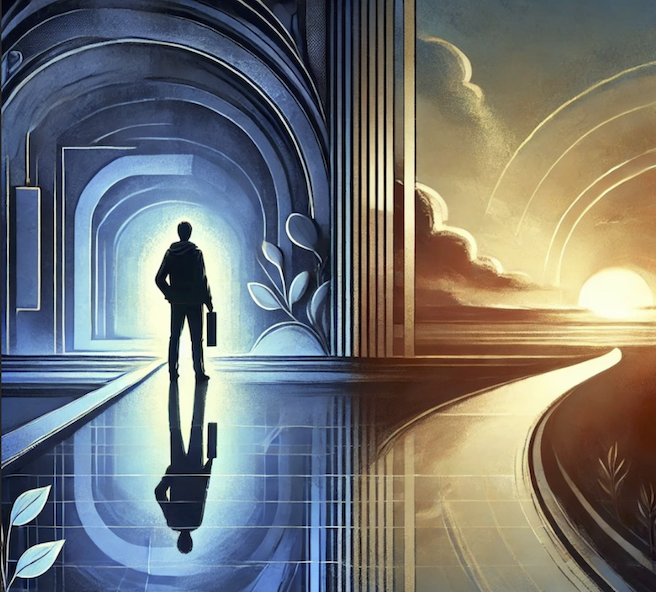
On January 1, 2025, I woke up to the reality that I was actually and truly retired. I have no professional position, no company or business to maintain, no formal work responsibilities, at all. I am living on my income from a modest pension, which I earned by contributing to the national retirement programs of both Sweden and the United States, as well as other savings. I have officially entered “le troisème age”, as they call it in French, “the third age” of life.
But I am not idle. As I noted in my retirement announcement, once a writer, always a writer. Book projects are starting to take shape. A couple of poems have emerged, as well as a song or two. I have also just accepted my first invitation to keynote a conference – in June. By then, I expect to be more or less fully recovered from the medical condition that presaged my decision step back from the demands of being a global CEO and to put a formal bookend on my working life.
Since I am retired, I am not asking for payment for any speech, nor any advance payment for any book. These are activities, sources of meaning and joy in my life – not “work”.
I noted in my retirement announcement that I intended to write later regarding my initial personal reflections about my overall career. I needed time to think, and to make progress on recovery. “Later” is now. I have fortunately been gaining strength these past few months, and I now find myself able to sit in front of a keyboard again.
So here comes a first installment, or perhaps this is a first draft, since I expect I will have more, and different, personal reflections as time goes on.
The timing of my decision: a tectonic shift in global geopolitics
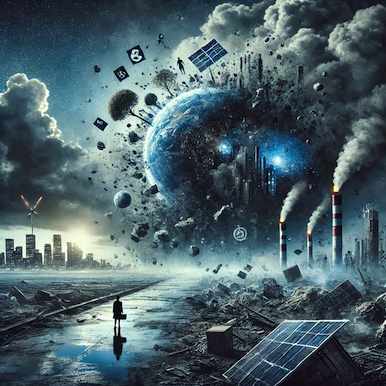
This must be said first: my official working life seems to have ended just as a new era in global geopolitics has begun. The initial outlines of an enormous historical shift are all too clear: sudden policy changes, realignments, the closing or deprioritizing of mission-critical agencies in the global sustainable development arena, imploding budgets for research and aid, a tidal wave of backlash against decades of rational progress on climate, environment, and human rights, these are just a few its elements. Judging from some of the messages I have received – from friends, colleagues, former students – this is a moment of demoralization. One friend, who has worked for decades in the field, wrote privately that current events risk making “most of what we have been working on to seem marginal and meaningless.”
I sympathize with the worry, but I choose not to accept that as destiny. (Nor does my friend, I am quite sure.) At the turn of the millennium, I published a widely reprinted essay entitled “Sustainability is Dead – Long Live Sustainability.” For different reasons, as 1999 was rolling over into the 2000s, prospects for sustainability looked bleak. The world seemed dismissive. The professional dialogue was somber. The term struck many as hollow. But that was 25 years ago, and obviously, sustainability did not die. In retrospect, it was entering a period of incubation and innovation. And just as I believed they would, people regrouped, developing new frameworks, strategies, policies, and practical approaches. Sustainability, it turned out, was just taking off.
In any event, I am apparently entering formal retirement at – or just after – an historical high point for sustainability. Major change-processes of this kind are always cyclical, just like the economies they are trying to transform, so there will now be a slump. It will likely last for some years. People are actively reaching out to me to specifically ask for help in thinking about this. Or just wanting to talk about the situation with someone senior who “gets” it.
So my first personal reflection is: I may be retired, but I believe I will have some role to play going forward, some contribution to make. What, exactly, will that role be? That is still to be determined.
My feelings looking back: happiness, gratitude, astonishment
My decision to retire a bit earlier than planned was the direct result of a highly stressful work situation, which in turn was (partly) caused by the tectonic geopolitical shifts described above. That simple fact might lead one to assume that I carry some negative feelings into my “third age”. And of course, there was some significant sadness involved in saying goodbye to the people and the institutions I had the pleasure of working with, and the formal leadership roles I was privileged to play in the global sustainable development arena. Had it been a realistic option, I would have stuck around for a few more years.
But that’s history. At this moment, reflecting back on a professional life lived in the service of fostering the pragmatic and necessary ideal we call sustainability, and the practice of getting there that we call sustainable development, I feel nothing but happiness, gratitude, and astonishment.
Happiness, that I found a line of work that kept me intellectually stimulated, creatively curious, emotionally engaged, and gainfully employed, over decades. Sustainability has always been an up-and-down “business”, but once I found it, and it found me, I was committed for the long haul. I never regretted it for a moment.
Gratitude, that I was able to do work that felt deeply meaningful, and to make a small contribution here and there. But mostly, I feel a deep sense of gratitude for the extraordinary opportunity to work with so many wonderful people: teachers, mentors, colleagues, partners, students, and friends.
And astonishment, that so much of the future that we envisioned for sustainability actually happened.
At the beginning, that “we” was a pretty small group, globally speaking. In the late 1980s and early 1990s, that “we” could be counted in the thousands, or tens of thousands. (I know, because starting in the middle 1990s, I used to make an annual estimate of how many people worked in sustainability, using a variety of data sources.) According an estimate I recently asked ChatGPT to perform, that number is now comfortably in the several millions, with a couple of million more in relevant university courses.
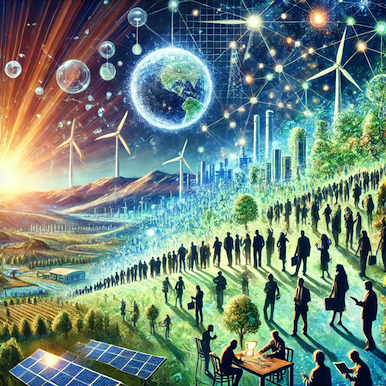
That is, the number of people working actively in sustainability-related professional jobs has increased a by a factor of about 100, two orders of magnitude, in about 30 years.
How did that happen? Awareness spread. Laws changed. Institutions arose, or changed course. New jobs were created. Existing jobs got repurposed. Training programs proliferated. Business and finance adapted, embracing sustainability concerns first incrementally, and then as a genuinely strategic concern (though a lot of backlash is happening just now).
And of course, all of that was also fueled by the tireless and constant efforts of scientists to keep documenting what is happening to our planet, journalists to translate their results into good text and video, and civil society activists to raise alarms and focus attention.
At this time of worry about many issues associated with sustainability, and their future, it is important to also look backward, and remember how far this movement has come. It once was marginal. It is far from marginal now, and it will not become marginal again. We won’t let it.
My thoughts looking forward: taking the long view
Like the vast majority of those working in sustainability and sustainable development, I am often worried, and more so now. Geopolitical tension is palpable. Science itself – the crown jewel of human intellectual achievement, and the foundation of sustainability work – is increasingly under scrutiny or even suspicion, despite having advanced human knowledge and capability with amazing rapidity and saving, lengthening, or improving billions of lives in the process. Meanwhile, we are at risk of losing decades of patient work to advance global policy regarding our sustainable stewardship of nature, universal health and wellbeing, human rights, equality under the law, and democratic, participatory, inclusive ways of making collective decisions.
Phrased this way, these concerns sound abstract, but they can be measured in lives lost, lives diminished in quality, habitats destroyed, species declared extinct. Actively choosing to reverse course on such matters strikes me, personally, as morally wrong. But if one is disinclined to moralize, or if one perhaps finds other moral values more important, this is still a bad development. In fact, with just a little work, economists can even put a price on all this loss of human and natural “capital” and frame it as “cost” – and a very expensive one.
In sum, this is a difficult moment to cultivate a sense of hope and optimism. And yet, that is what I aim to do. I intend to take the long view.
Do not misunderstand me: I do not intend to disengage from the challenges of this historic moment. Working to reverse this strange and counterproductive antipathy to science, knowledge, evidence, and the documentation of observable facts is likely to be a problem on which I will try to focus attention, as well as my own limited energy. And I will, like everyone, be watching global developments carefully, and trying to figure out the best way to make a contribution, given my new role as an “emeritus” professional, an unaffiliated writer, speaker, and advisor.

But my principal intellectual focus, in the near term, is going to be the long term. How we think about the future, what we understand it to be. And especially how we try to shape it – or rather, shape the contexts and the forces that are producing it, with a vision of real sustainability as our guiding star.
Once again, here comes a promise, or perhaps it’s a prediction: I will be writing more about that. A lot more.
— Alan AtKisson, Stockholm, 27 Feb 2025
Illustrations by DALL-E based on the blog text and author prompts.
 Alan AtKisson