We live in a living planet.
Notice I wrote “in” where your mind was expecting “on”. That little word “on” can lead us astray, mentally. We do not live “on top of” but rather inside a sphere of pulsing, dynamic systems, a colorful, evolving kaleidoscope of life that is the most wonderful and visible characteristic of our beautiful planet, Earth. We live inside the wall of that sphere, a delicate-but-resilient bubble composed of gases, waters, soils, rocks, and a wild, teeming horde of constantly self-reproducing microorganisms, plants, and animals — including us.
It has become a David Attenborough-cliché to point this out. And yet I keep asking myself, how many human beings understand the central importance of this seemingly banal fact of our very existence? How many people spend even one minute a day thinking about it?
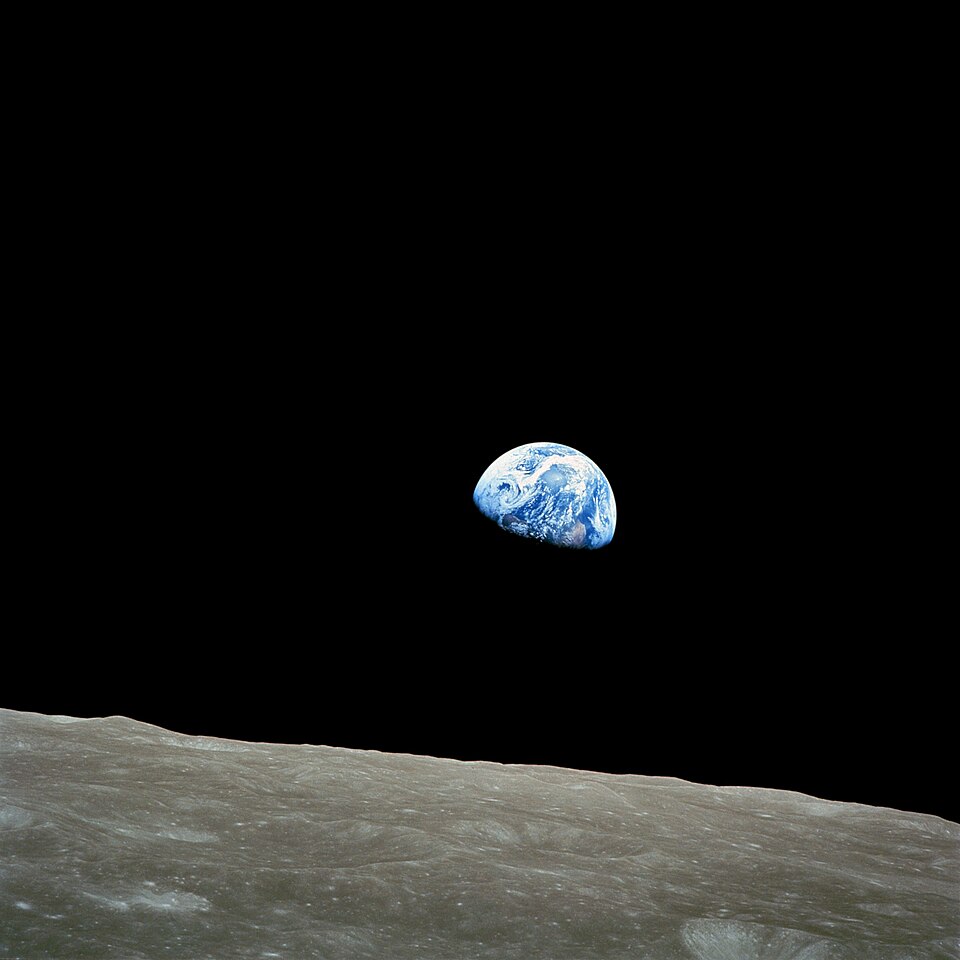
A very small number, I wager. During these early days of 2026 (at least, according to the Gregorian calendar), I would guess that number to be even smaller than usual.
In recent weeks, I have been writing blog posts about what it means to hold — and to try to sustain — a liberal (in the sense of freedom-loving), democratic, centrist position in today’s world. I have done that because I believe the center, a place reachable from a variety of political starting positions, is where sustainability is best positioned.
But it has been a very challenging period to make that argument. Geopolitically, the times are tumultuous. Here in Sweden, for example, the impact of the US government’s threats to annex Greenland, by force if necessary, left political leaders striving to retain their exceedingly cool demeanors as they used extraordinary phrases like “unacceptable behaviour” and “we will not be blackmailed”.
Meanwhile, the awful violence on the streets of Minneapolis has also made a huge impact in this generally calm Nordic country. It has been all over our nightly TV news. I listened to a radio broadcast that explained the Swedish-immigrant roots of Minneapolis as a city, which then cast an odd light on Swedish Radio’s description of the anti-immigrant operations and resulting protests being enacted there. (Being myself a reverse immigrant, US-to-Sweden, added yet another odd layer of resonance.) As a result of these dramatic and tragic events, some people I know who had been thinking about trips to the US are reassessing their plans. Business leaders whose industries are dependent on US markets are being asked, by the local economics reporters, whether they have other global options. Nearly everyone I know in Europe is shaking their heads ruefully and saying, “What is happening to the United States?” Just yesterday, when I reminded a friend that I am a dual US-Swedish citizen, she said, “I am so sorry.”
One very unexpected by-product of all these disturbing circumstances has been an increase in size of the political center, that diffuse space where people from very different political perspectives can find important things to agree on. This is true both in Sweden and in the US. Even the head of Sweden’s farthest-right party, which is generally very friendly to the current US administration, was harshly critical of the American government’s demands for Greenland and spoke out in support of international law. Even the National Rifle Association in the US, which is decidedly right-wing in its profile, demanded a “full investigation” of the horrific shooting death of a protester, ICU-nurse Alex Pretti, just as Minnesota’s Democratic leaders had been doing. Some Republican governors, senators and congressmen have moved at least some way towards the center aisle on this issue, allowing their voices to mingle with Democrats, as well as business CEOs, in expressing their worries about what is occurring and to call for de-escalation.
It has been personally devastating and depressing to wake up daily to news of pointless international tensions as well as protesters getting shot, followed by the immediate blaming of the victims by the authorities in question on social and traditional media, often in incendiary terms. One’s heart goes out to the loved ones of the deceased and to the brave souls standing up for legal and civil rights, due process, and basic human decency.
In trying to imagine a way out of these various morasses, both international and US-domestic, I feel reduced to a vague hope that the extremity of these situations will ultimately result in breaking down walls of polarization, and lead to at least a partial restoration of fundamental political dialog in the United States, as well as a concerted effort to repair the fabric of transatlantic cooperation with Europe. But that is a hope, not a prediction.
It is understandably difficult to think about much else when dramatic events like this dominate the headlines on both sides of our common ocean. (I am also saying this to myself, because these events have been distracting me from working on my book.) And yet, we must also think about something else. Something much bigger than any country, any ocean.
During these same difficult days, a remarkable report came to light, authored by the British secret service agencies, MI5 and MI6. The report’s purpose, in line with those agencies’ purpose, is to inform political leaders and authorities about serious risks to the national security of the United Kingdom — risks that could undermine the fundamental functioning of that society.
What are those global risks that the UK’s security agencies are so concerned about hitting the British Isles with serious or even existential impacts?
Ecosystem degradation and collapse. Resulting crop failures and food system disruptions. Intensified natural disasters. Infectious disease outbreaks. Loss of fisheries. Water insecurity. The report goes on to describe wide-ranging economic, social, and political risks resulting from various kinds of ecosystem degradation, and the report’s authors are “highly confident” that these risks are real.
A forecast like this is the direct opposite of the world most people want, need, or envision — for their future, or their children’s future. It is the direct opposite of “sustainable”. But this new UK-government report worries that “collapse” is where we currently appear to be headed, globally.
A presentation of global risks stemming from our mismanagement of the planet’s ecosystems is the farthest thing from new, of course. What is new is the author: not an environmental NGO, not the world’s assembled scientific experts, not even the World Economic Forum (though WEF has also echoed these issues in various risk reports). The author of these ringing alarm bells is not someone who can be called an “alarmist”, but rather the cool analytical heads of the British secret service.
And so I return to my opening sentence: We live in a living planet. We are an integral part of that planet, a product of its evolution, intricately bound to all the rest of the life in it. It seems an achingly obvious thing to say, a kind of bland truism. But just as achingly obvious is the fact that we humans, at least in the way that we act collectively as a species, are nowhere close to understanding what that means. We are nowhere near to truly comprehending the enormous responsibility that we have now assumed, as a global, industrialized civilization, for taking care of this living planet. We are nowhere close to turning the tide on these existential risks to our way of life — risks that have now been acknowledged in the same government rooms that assess the risk of foreign espionage, hostile attack, or nuclear conflict.
Instead, in many of the world’s wealthier countries (certainly in Europe and the US), leaders have been slowly backing away from their recent warm embrace of sustainability and the globally agreed Sustainable Development Goals. They have been canceling or watering down some of the forward steps that had already been taken or planned, legislatively and practically. Caring for the Earth is no longer an urgent priority for some of the investors who previously preached sermons on the topic. The operative word is “backlash”.
Turning that backlash back around will take time and focused effort, in extremely trying circumstances. There is a lot of news to keep track of, many geopolitical trends to worry about, and even a growing number of people to mourn in these fraught times of January 2026. The Iranian Government has slaughtered thousands of protesters. Sudan is nearly three years into a horrible civil war. Russia is nearly four years into raining its bombs on Ukraine.
But while we must attend appropriately to all the headline-level urgencies of this moment, we nonetheless cannot afford to take our eyes off the truly important, long-term ball — a spinning marble of life, orbiting around a small yellow star, at the edge of a normal spiral galaxy, in a vast and mysterious universe. A blue, green, brown, and white sphere of complex living systems that, as we have only recently become aware, is the only thing in the visible Universe to which we human beings truly belong. If there is one thing we all should be capable of agreeing on, it is that, and on the enormous responsibility for planetary care that comes with it.
For humanity, in all its cultural forms, and in every expression of its political or religious beliefs, this Earth — this unique planetary body of life, of which are an integral part — shouldbe the one thing that we can all agree to place, and hold, in the center.
And then agree to focus our collective, collaborative efforts, as stubbornly as we can, across as many differences as possible, on acting accordingly.
*
Subscribe to this blog as a newsletter, either here (see “Subscribe” button) or at Substack.

 Alan AtKisson