A “near-complete recovery.” That is how I describe my situation now, eight months after a sudden debilitating collapse in physical and cognitive capacity, caused by extreme stress in an already-demanding job. I wrote in detail about this in a previous blog post and LinkedIn “Pulse” article.
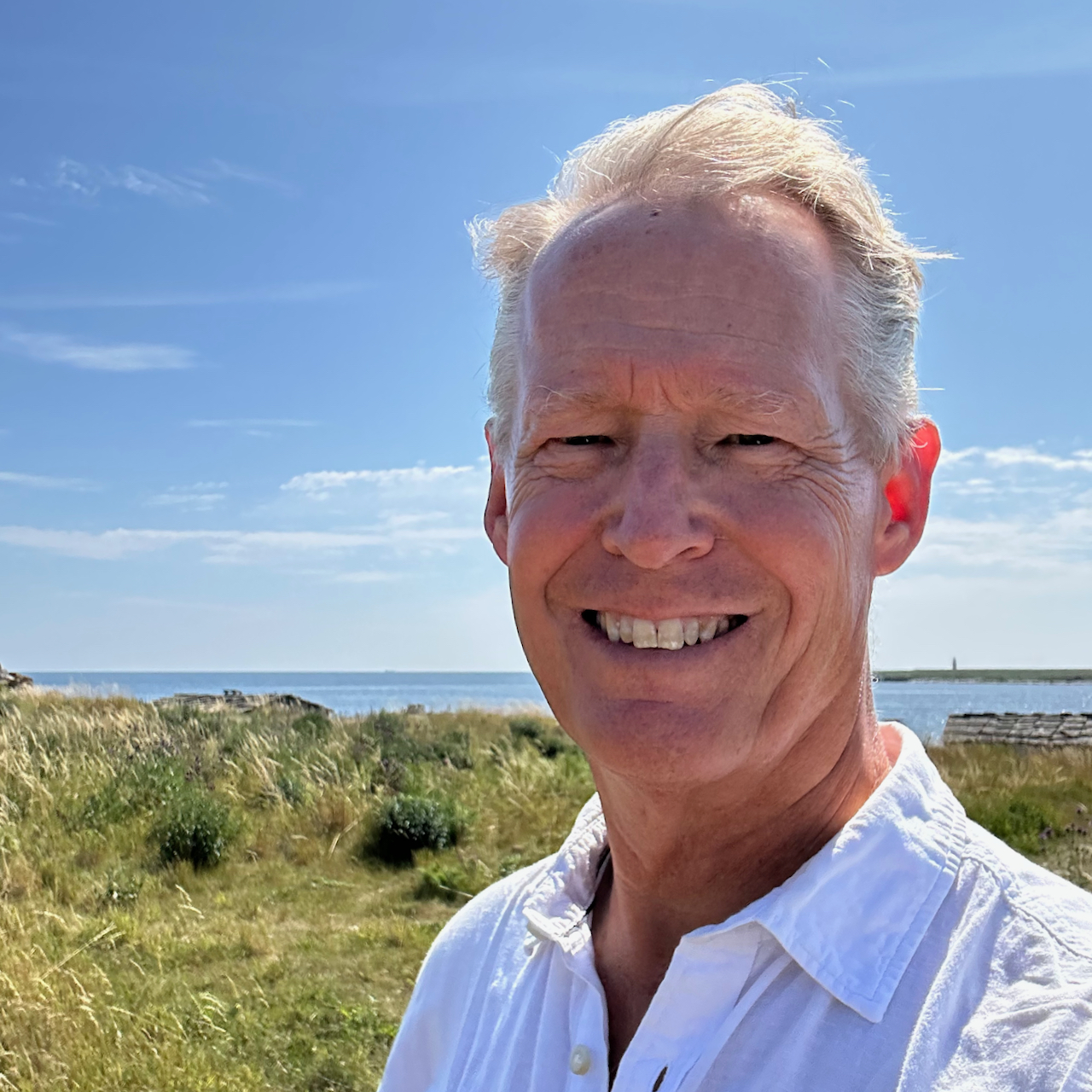
The first thing to say about my much-improved health is how grateful I am. Grateful to my wife and my family for their unstinting support and understanding. Grateful to the Swedish medical system and the caregivers at my local public clinic (where I have always gotten very good care). Grateful to the warm words that poured in from friends around the world.
“Near-complete” means that life feels relatively normal again. I still tire more easily than before, and I would not yet put myself into a high-stress work situation, or take off on a round-the-world speaking tour. But I “feel again myself” as we say in Swedish (“känner igen mig”) when we come back to familiar territory. I can think, write, exercise etc. more or less as I did before.
What follows is a description of my recovery process, which might be of use to others experiencing serious burnout, followed by some thoughts on where I am now and where I am going next.
A personal recipe for recovery
Rest. Necessary activity. Rest. Pleasurable activity. Rest. A little bit more ambitious activity. Rest. And so on.
“Burn-out” is an all-too-common phenomenon in Sweden, so there have been years of research into it, leading to shifting diagnostic terms and treatment recommendations. So once I had left my position at the end of December 2024, and was fully free of work and work-related stress, I did not just go to bed. Oh, there was plenty of rest involved, but it was mixed with increasing amounts of activity. Especially meaningful, pleasurable activity.
Caregivers at the local public clinic near where I live (two doctors and a psychologist) stressed the importance of not thinking of myself as “sick”. Obviously things had gone awry in my brain and nervous system, leading to depleted capacity to regulate the hormones involved in gearing up for stress and recuperating from it. As with having a broken bone, you just have to let the healing happen, building strength, slowly and deliberately.
(Of course, everyone’s experience is unique. What worked for me might not work for others. Getting good care and personalized guidance is important.)
For the first few months, I kept a special notebook. Every day I recorded my energy level, how I was feeling in terms of mood and emotion, and what I was able to do, cognitively. I devised a little 1-10 scale. I wasn’t exactly rigorous about this, but I was at least methodical, writing notes every day about progress, regress, progress again.
I swam almost every day. Swimming was an excellent recovery activity. Our local public pool was perfect for this. At first, I could only do about ten minutes of elementary backstroke, paddling around in the slow zone, before I felt exhausted. My caregivers encouraged me not to get discouraged, just go, do it regularly, and watch what happens. After three months, I was back in the fast lane, doing crawl sprints to end a 20 or 30 minute workout.
Cognitively, at the beginning, I was not up for much more than jigsaw puzzles and light reading. But I enjoy jigsaw puzzles, the slow process of looking, seeing, watching a picture come into clarity, which also provided a nice metaphor for my process. A series of humorous travel books by J. Maarten Troost (the first is called “The Sex Lives of Cannibals”) gave me a vicarious tour of the South Pacific and was exactly the right level of comprehension challenge. Troost’s series also added more serious tones as it progressed, which matched my own progress.
And I sorted my papers. I am arrogant enough to believe that at least some of my archive (reports, book research, correspondence, etc.) might be valuable someday, especially those documents linked to the early history of the sustainability movement and some of its key thinkers. I save a lot of stuff, but it was not in any order. Being in recovery from burnout and newly retired, in the dark of the Swedish winter, was a perfect time for pursuing this activity, which I could do slowly and meditatively whenever I felt like it. It was useful, not stressful, and it awakened memories about my professional journey these past 45 years.
When the light came back
After a few months, I was writing seriously again, making some progress on my new book, and also receiving speaking invitations. I responded positively – but carefully. I had my special notebook and my data on progress assessment as a reference, so I could project the future of my recovery process as well. I predicted that by June I would be well enough to speak at an academic conference in Gdansk (I was), but that I should avoid committing to travel in Asia so soon as September (I will instead be speaking by video to a conference in Vietnam).
When the light came back in Spring, I began taking walks – very slowly around the block to start with, but by April and May these were fun, hours-long treks exploring parts of Stockholm I had never seen before. Recently released from a lifetime of very goal-oriented work, it was difficult, at first, to accept that taking pleasant walks was now my “job” and an important part of getting better. Indeed, I had to keep actively reminding myself that I had no problems to solve on those walks, no agenda to follow: I was just walking.
I wasn’t even trying to walk faster (one of my symptoms was being incredibly slow). But sometime in April, I remember noting to my wife that I was mostly back up to normal walking speed, which she confirmed: she was no longer having to check her own pace to match mine.
A key principle guiding my whole process, following medical advice, was to find the appropriate level of challenge – small steps upward, no big leaps – and the right mix of activities. Swedish medical guidance documents, which I downloaded and studied, talked of balancing three classes of activity: restorative things like resting or walking, important things that you really have to do (like paying the bills), and the fun things you really enjoy doing, with an emphasis on the latter category. The psychologist encouraged focusing on those activities that would put me back in touch with a sense of myself, after such an intensive and stress-filled period of focusing almost exclusively on my professional role, with its institutional priorities and imperatives. So I spent a lot of time with family, I started writing songs again, I read increasingly difficult-but-interesting books (I love books on physics and philosophy), and I started a few very playful art and writing projects. And I visited my favorite Stockholm cafes, often.
In April, I got impatient. I was up to 60-70% on my personal recovery scale, and I felt stuck. I often still felt very tired, mentally and physically. So I booked a consultation with the doctor again, partly to put my mind at ease with some bloodwork (oddly, they hadn’t bothered to do any blood tests earlier, because they were so sure of the original diagnosis), and partly to get more advice on how to get up to 100%. The doctor was happy to check my blood indicators, no surprises there. More importantly, she had some very important advice.
“Maybe,” she said thoughtfully, “you should see it as a good thing that you feel tired sometimes. Maybe you are finally hearing your body’s signals when it is telling you that it’s time for a rest.”
Hmm. She had a point.
Back in action – but on different terms
After a final consultation at the clinic in May, I checked myself out of care and declared myself 80-90% recovered. (My caregivers agreed with that assessment.) I am writing in early August, and I have now had the additional benefit of the long, Swedish vacation season. I am ready to emerge from my snail-shell and re-engage with the world.
But oh, what a world it is.
My arrival at this new phase of life affects not just my economic status, level of ambition and areas of focus; it is causing a thorough re-evaluation of how I want to engage with that world, which seems considerably more turbulent and more deeply concerning than it did just one year ago.
Formally, I am still retired. Or, as the Swedish pension agency prefers to express it, I am taking out my pension, which is not necessarily the same thing as being a “pensioner”. As a dual citizen who spent half my adult working life in the US and half in Sweden, I also have the US Social Security system to deal with. But I must say, both systems, Swedish and American, have worked flawlessly and efficiently. My (relatively modest) pension began flowing quickly and arrives every month like clockwork.
So, I am not working. I am writing, and when I am doing anything else professionally (e.g. speaking, advising) I am volunteering. Soon, I plan to also begin engaging in public discourse on issues of concern to me – issues where I think I have something to offer, or a duty to raise my voice.
That’s going to be a big change. For the first time in many years, I am not ethically or professionally constrained to keep my personal opinions to myself. When I worked as a senior UN and government advisor, or as a Swedish government official, or as an intergovernmental chief executive, discretion and professionalism in matters of public discourse was a paramount concern. I was not speaking for myself. I was speaking as a representative of the institutions I served – or previously, as a consultant, I was speaking to them, and sometimes even for them. Everything I said publicly went through that filter, and was aimed, as ethically and thoughtfully as I could aim it, to support positive institutional and cultural change towards sustainable development.
That ethic still means a great deal to me, but I acknowledge that I no longer represent anything or anyone other than Alan AtKisson, author, speaker, and former public official.
In sum, you will soon be hearing more from me, on all kinds of topics that I might previously have avoided. When not writing my book, I’ll be writing other things, on other platforms, and speaking out. Sharing thoughts. Perhaps even showing you the results of the other creative activities I indulge in: music, photography, art. And describing some of my travels and professional – though for now, all voluntary – experiences.
No expectations that anyone will be listening, however! It’s a crowded world, and there are countless voices more important than mine.
Nevertheless, I’ve been writing and acting in the public sphere most of my adult life, working to advance certain understandings and values taught to me by great teachers and mentors, and I have no plans to stop doing that. So I’m pleased to be able to say this:
I’m back.
 Alan AtKisson